Salvage wood guidance
Salvage wood Dallas
Salvage wood is tough, character-rich material, but it needs careful inspection. Use these tips to choose boards that will stay stable in a finished build.
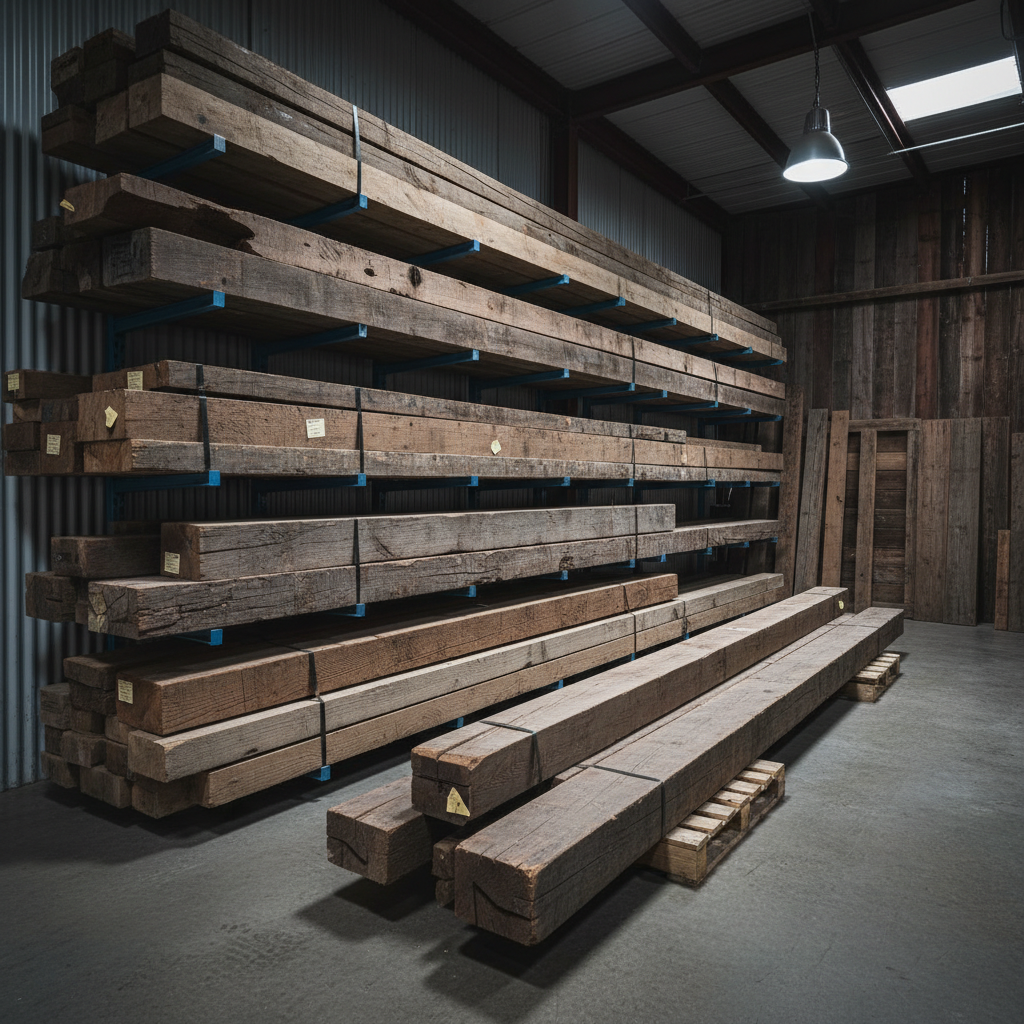 Salvage wood yard
 - Inspect for metal, rot, and soft spots.
- Check for straightness and solid cores.
- Ask about source and storage history.
How to evaluate salvage wood
Salvage wood can come from barns, industrial sites, and older structures. Ask how the wood was stored, whether it was exposed to chemicals, and if it has been de-nailed. Stable salvage wood should still be dense and sound.
Project ideas for salvage wood
Popular salvage wood searches
Search phrases tied to salvage and reclaimed lumber.
Kiln load policy
We run large kiln loads only (2000 bd/ft minimum). Wood must air-dry under cover for a few months before kiln scheduling. Wet wood ties up the kiln, raises energy use, and increases checking, so it is accepted only at a premium when schedules allow.
We will confirm sizes, condition, and pickup timing.